
Refractories For Blast Furnace

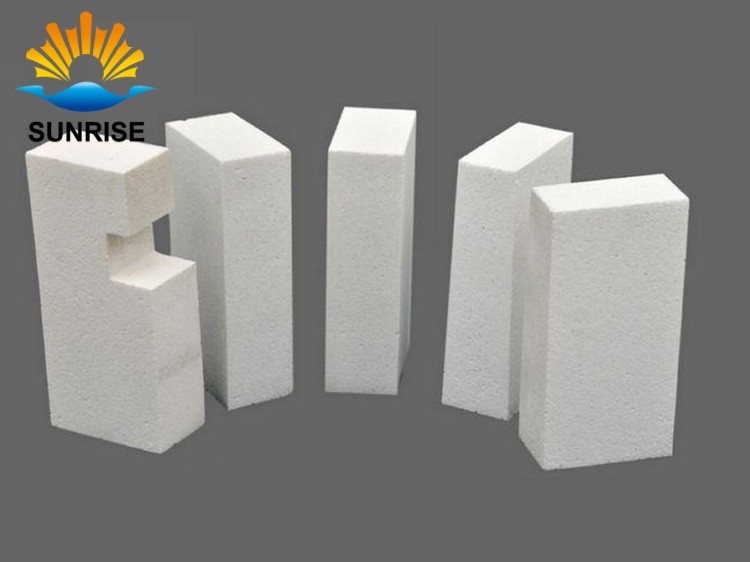
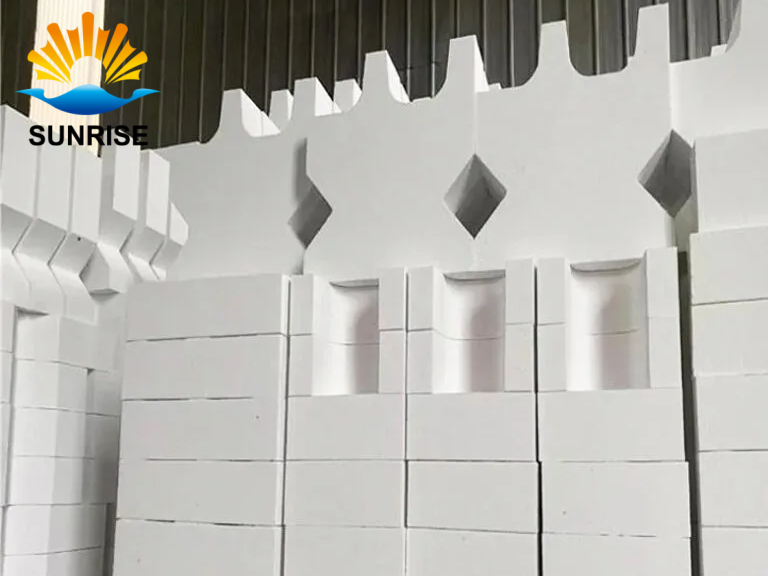
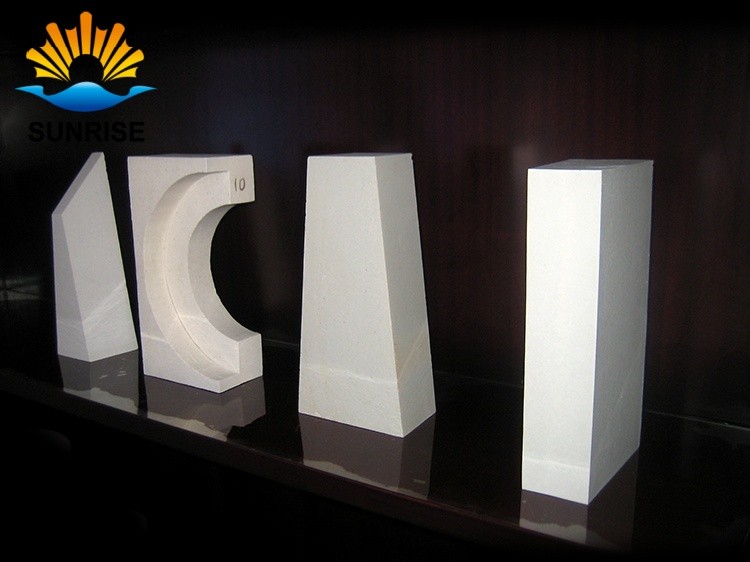
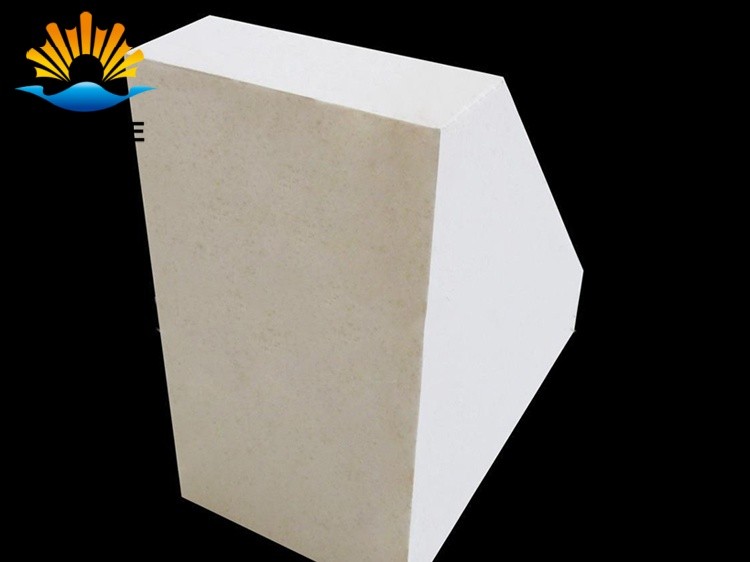
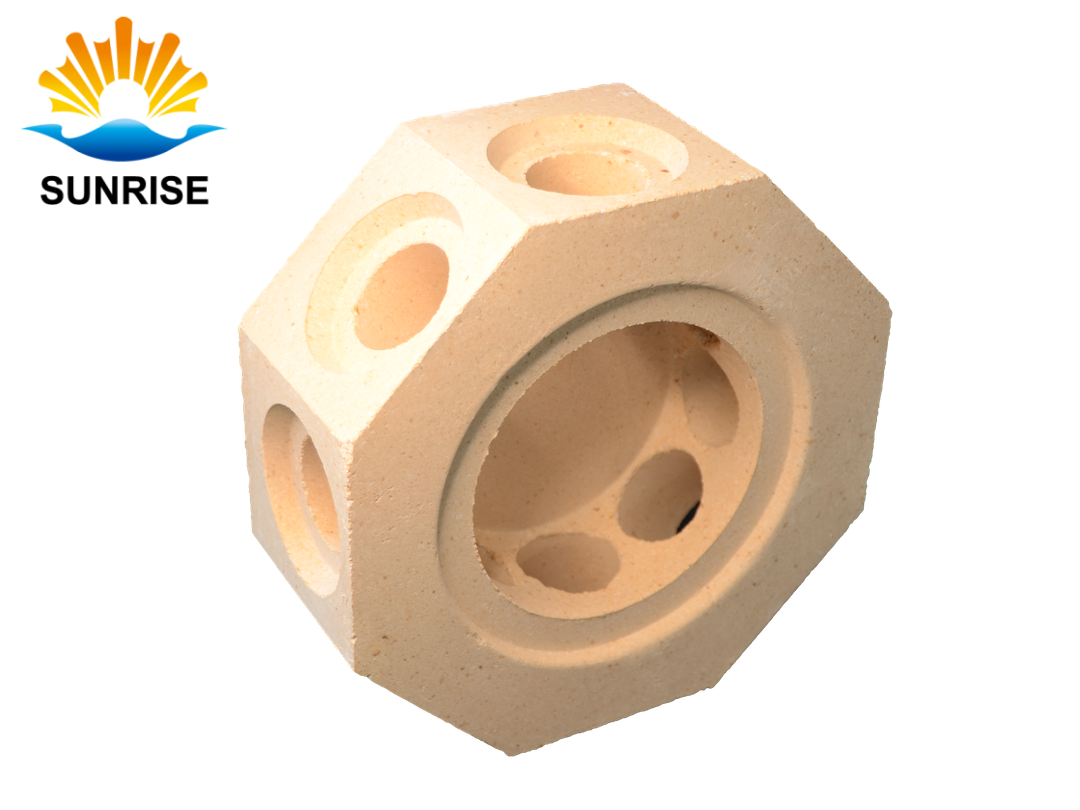
Corundum mullite brick
Al₂O₃ : 80%
Bulk density : 2.85g/cm³
Apparent porosity : 18%
Cold crushing strength : 100 MPa
PRODUCT DESCRIPTION
Introduction
Corundum mullite brick is a refractory brick with composite crystalline phases of corundum and mullite. It takes mullite and fused corundum as raw materials, undergoes ingredients blending, high-pressure forming and ultra-high temperature sintering.
Features
Good High-Temperature Volume Stability
Low permanent linear change rate after high-temperature service, minimal shrinkage or expansion, no deformation or cracking under long-term thermal load.
Superior Thermal Shock Resistance
Matched thermal expansion coefficient of dual mineral phases effectively relieves thermal stress, resisting frequent temperature fluctuation and rapid cooling-heating cycles without spalling or peeling.
Strong Slag & Erosion Resistance
Dense sintered microstructure restricts penetration of acidic and alkaline slag, featuring great corrosion resistance against molten ash, furnace slag and flue gas medium.
High Mechanical Strength & Wear Resistance
High cold crushing strength and hot bending strength, capable of withstanding material scouring, mechanical abrasion and impact inside kilns.
Application
Corundum mullite bricks can be directly exposed to flames. They can be used as heat insulation linings for high-temperature industrial furnaces and working layers for other industrial high-temperature furnaces. They are mainly used in the petrochemical industry and synthetic ammonia gasification furnace and magnetic materials. In blast furnace, it is mainly used in the bottom, hearth, tuyere and iron notch of ceramic cup.
TECHNIQUE DATA
| Index | Corundum-mullite bricks (GM-80) | ||
| Standard | Typical | ||
| Al2O3, % | ≥ | 80 | 83.75 |
| SiC, % | — | — | — |
| Fe2O3, % | ≤ | 0.8 | 0.53 |
| Apparent porosity ,% | ≤ | 18 | 15.8 |
| Bulk density ,g/cm3 | ≥ | 2.85 | 3.02 |
| Cold crushing strength,MPa | ≥ | 100 | 125 |
| 0.2MPa refractoriness under load0.2MPa ,℃ | ≥ | 1700 | 1720 |
| Linear change after reheating (1500∘C×2h) % | — | 0~+0.5 | +0.1 |
| Refractoriness ,℃ | ≥ | 1790 | >1790 |
| MOR ,MPa | ≥ | 12 | 16.3 |
| Thermal expansion coefficient (1000∘C), % | — | 0~+0.7 | 0.65 |
| Thermal conductivity (940∘C), W/m·k | ≤ | 2.8 | 2.2 |
| Thermal shock resistance (1100∘C water cooling, times) | ≥ | 20 | >30 |
Online Message
* Note: Please be sure to fill in the information accurately and keep the communication open. We will contact you as soon as possible